The Infrastructure Gap Nobody Wants to Talk About.
By Jim Burness, CEO & Founder, National Car Charging
I've spent a lot of time in parking lots.
Not the kind of time most people spend: circling for a spot, and running into a store. I mean really “in” them. Walking sites, looking at charging hardware, talking to the property managers, facility directors and fleet operators who are trying to make this “charging thing” actually work for their customers, employees and businesses.
And what I keep seeing is a version of the same thing: infrastructure that was deployed with good intentions, real investment, and genuine optimism is sitting broken, underutilized, or limping along on its last legs.
That's the gap I think about on Earth Day. Not the gap between where we are and where we want to be because that one gets plenty of attention. Rather, the gap between what we've deployed and what's actually delivering.
All too often, buyers (and so many in the industry) confuse installation with impact.
The EV charging industry has done an impressive job of moving fast.
Billions in investment. Hundreds of thousands of chargers deployed. Government incentives, corporate commitments, ribbon cuttings. Truly, we have really nailed the ribbon cutting and press ops!
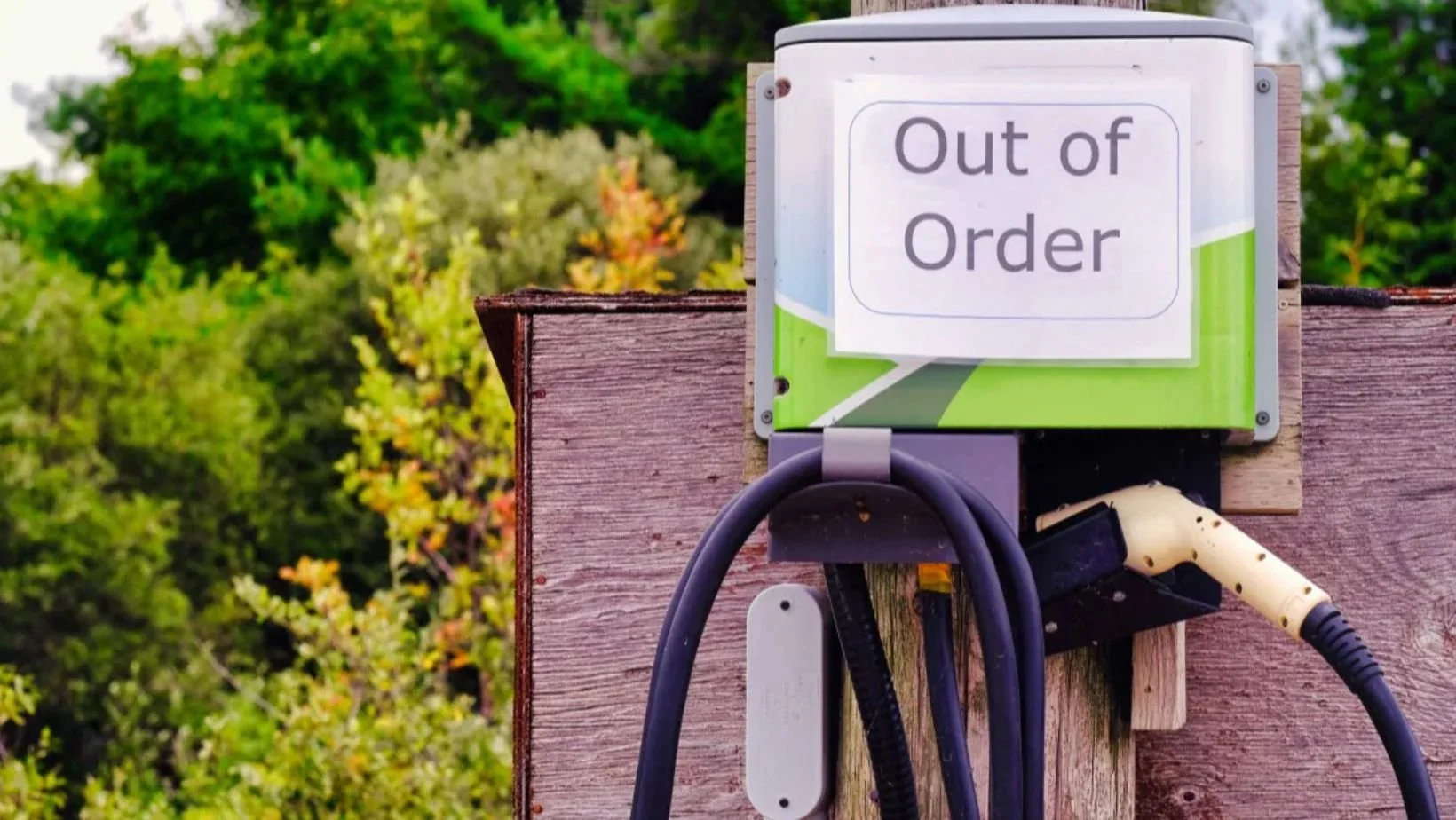
And yet, ask any EV driver about their actual experience with public charging, and the mood shifts pretty quickly. Broken screens. Out-of-order stations. The charger that shows "available" on the app right up until the moment you're standing in front of it in the rain. Sites that look operational from the outside and, upon closer inspection, very much are not.
We've gotten very good at deployment. We haven't gotten good enough at what comes after — maintaining what we've built, or making sure it was designed to last in the first place.
That's not a criticism of the people building this industry. I'm one of them, and I'm proud of how far we've come. But it's an honest assessment of where we are. And if we're serious about moving this transition forward, we also have to be honest about this gap.
Reliability is a climate issue, not just a customer service issue.
Here's the argument I find myself making more and more, and I think it needs to be said louder: a charging station that fails prematurely isn't just a bad experience. It's an environmental cost.
Manufacturing has a footprint. Shipping has a footprint. Disposal has a footprint. And "we'll just replace it," which is said far more often in this industry than anyone likes to admit — has all three.
Every time a piece of charging hardware cycles out early because it was specified wrong, installed without a maintenance plan, or just not built to last, there's a real climate cost attached. One that rarely shows up in anyone's sustainability report.

The most sustainable charger isn't necessarily the newest model with the best spec sheet or the sleekest industrial design. It's the one built to go the distance, maintained consistently, and reliably serves drivers three, four, five years later. Boring? Maybe. Effective? Absolutely.
At National Car Charging (NCC), that philosophy shapes every product decision we make. And when we're asked to expand our portfolio, we say 'no' far more often than we say 'yes.' Not because we're cautious, but because we're deliberate.
There's no shortage of hardware vendors happy to sell you something new and shiny. What's harder to find is a charging partner willing to tell you when something isn't the right fit, when a newer model isn't actually better for your use case, or when the product everyone's buzzing about wasn't built to last in the conditions you're actually deploying into. That's the conversation we'd rather have, even when it's a shorter one.
The products we do say “yes” to are built for the long haul, designed with modularity in mind, and spec'd with the driver's experience at the center — not the manufacturer's marketing deck. We're not in the business of buyer's remorse. We're in the business of infrastructure that performs, year after year, without apology.
And the proof is straightforward: our clients come back. In an industry where trust is hard to build and easy to lose, a strong return rate and a reputation for getting it right aren't things you can fake. They're things you earn — the same way good infrastructure earns its keep. One smart decision at a time.
Here's something I don't hear enough people in this industry say out loud: longevity is a climate strategy. I think it's time we changed that.

The questions that actually determine outcomes.
I talk to facility directors, property owners, and fleet managers every day. And one thing stands out: the ones getting this right are asking a fundamentally different set of questions.
They're not just asking how many chargers they can deploy. They're digging deeper and asking harder questions. Which hardware fits their specific use case. Who's maintaining it and what that relationship looks like at 2am on a Tuesday when something breaks. What this actually costs over five years, not just the quote that made the procurement team happy. And who is this site was really built for: the driver standing in the rain trying to charge, or the project manager marking it complete.
These aren't exciting questions. They don't generate LinkedIn impressions. Nobody's putting 'asked hard questions about maintenance contracts' in their Earth Day post. But they're the questions that determine whether charging infrastructure actually delivers on its promise or just fills a parking lot with expensive problems destined for the landfill.
My team lives with these questions every day. It is, I'll admit, not always the most glamorous work in the energy transition. But I've come to believe it's some of the most important work being done and the results, when the chargers just keep working year after year, speak for themselves.
What I'm genuinely optimistic about.
None of this is pessimism, by the way. I'm in this industry because I genuinely believe in where it's headed. And I believe the work we do at NCC is helping get it there.
Honestly, what gives me the most confidence right now isn't the headlines or the big investment announcements — though those are nice. It's the buyers. They're thinking further out, and they're treating maintenance as mission-critical. That's new. And it matters.
Our clients — new and returning alike — are also now inviting us in earlier. Not after the hardware is bolted in and the problems have started, but before. And honestly, that's the shift I'm most encouraged by.
Here's what's changed — and it's a good thing. The conversation used to start with 'we bought the chargers, now what?' Now it starts with 'we're thinking about doing this, walk us through it.' That's a meaningful shift. It leads to better hardware, sites that work for drivers, and a total cost of ownership that actually holds up. That's what early engagement unlocks and that's where the real value is. Not in the first charge, but in the thousandth.
That's how industries mature. Not with a headline or a ribbon-cutting, but through better questions, better focus, better decisions — made by people who've learned from the ones that didn't hold up. The chargers that lasted. The ones that didn't. The sites that worked. The ones that filled parking lots with expensive problems. All of it adds up, but only when we stop counting chargers and start measuring what they actually do. Installation isn't impact. The sooner our industry and the buyers we work with fully embrace that truth, the faster we all get where we're trying to go.
What Earth Day means to me this year.
This year's theme, 'Our Power, Our Planet,' resonates with me though maybe not in the way the organizers intended.
When I think about power in this context, I think about agency. The ability to make decisions that shape meaningful outcomes. To build things that last. To close the gap between what we promised and what we delivered.
That's the kind of power I care about. Showing up for the environment, for the communities we serve, and for the driver standing at a charger who just needs it to work.
The planet doesn't benefit from chargers that are installed and forgotten. It benefits from infrastructure that performs — every day, for every driver, across the full life of the asset.
That's what we're building at NCC. And honestly, that's what Earth Day means to me.
If you're a government agency, fleet operator, facilities manager, or property owner trying to figure out how to close that gap — I'd genuinely love to talk.
Because the goal was never just to deploy chargers. It was to build infrastructure that earns trust, changes behavior, and quietly — charge by charge — changes the world.
Happy Earth Day 2026!

Jim Burness is the CEO of National Car Charging (NCC), one of most experienced and most forward-thinking independent EV infrastructure solutions companies in the country.
NCC has been in this industry long enough to know what works and has never stopped anticipating what's next. As the EV landscape evolves, so does NCC: constantly advancing its thinking, its standards, and its solutions to meet clients where they are today and where they're headed tomorrow.
From deployment through the full life of the asset, NCC helps public agencies, fleet operators, facility managers, and property owners build charging networks built to perform — not just to open.