Written by Margaret-Ann Leavitt
At National Car Charging, we talk a lot about the people behind the work. Earlier this summer, one of those people stepped into a very different spotlight.
Jake Angevine, a member of the NCC team who helps manage our day-to-day operations in Austin, recently shared his story with KXXV-TV in support of the Richard Star Act. It’s legislation that could restore full military retirement benefits to more than 50,000 combat-injured veterans across the country.
For Jake, this issue is deeply personal.
Before joining NCC, Jake spent 10 years serving in the U.S. Army, including assignments in Germany, Iraq and Afghanistan. His career was cut short by combat injuries that led to medical retirement. He did not walk away from the Army before reaching 20 years; his injuries took that choice away from him. And under current law, that distinction has very real financial consequences for Jake and thousands of other combat-injured veterans.
The Gap the Richard Star Act Would Close.
That is exactly the gap the Richard Star Act is designed to address.
Today, many combat-injured veterans who are medically retired before reaching 20 years of service effectively lose part of their military retirement compensation when they receive VA disability benefits, a policy often referred to as the “wounded warrior tax.” The Richard Star Act would allow eligible veterans to receive both benefits they earned through their service and sacrifice.
Jake explained the issue simply:
“Combat injuries ended my military career before I could reach 20 years,” Jake shared. “I didn’t choose to leave early. I was medically retired because of injuries sustained while serving. Yet under the current system, veterans in that position can lose retirement benefits they would have earned had they been able to continue serving.”
And for Jake, this isn’t about an abstract policy debate. It is about family.
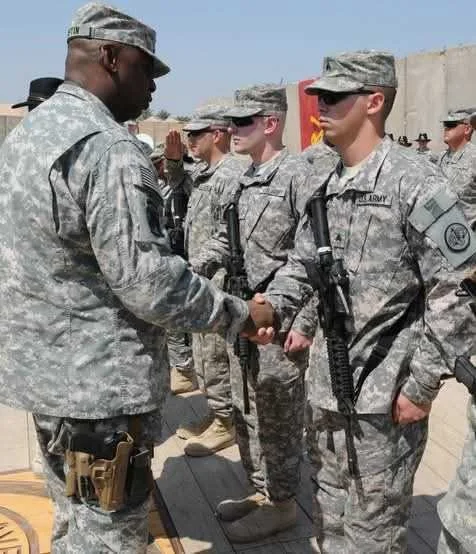
Jake Angevine receives a military challenge coin from General Lloyd Austin in recognition of his service.
He told KXXV-TV that receiving the retirement benefit he otherwise would have earned could add roughly $1,800 a month to his family budget. It’s money that could go toward opportunities for his children, including wrestling camps, training and their future education.
The Jake We Know at NCC.
That perspective hits especially close to home at NCC because Jake is not just someone we are rooting for from afar—he is one of our own.
Today, Jake helps keep one of NCC’s largest EV charging maintenance operations moving, managing the details, solving problems, building stronger systems and making sure nothing falls through the cracks. But the qualities that make him such a valuable part of our team—discipline, accountability, resilience and a deep sense of responsibility—were forged long before our Austin project and EV charging.
Before NCC, Jake was serving his country. And that service, and the sacrifice that came with it, remain an important part of who he is.
“Jake is the kind of person you want on your team when the stakes are high,” said Cheryl Alspach, Vice President of Operations at National Car Charging and Jake’s manager. “He brings an incredible sense of ownership to everything he does. He sees a problem, figures out how to solve it and keeps pushing until the job is done. Knowing what he gave in service to our country makes us even prouder to have him at NCC and incredibly proud to stand behind him as he advocates for other combat-injured veterans who deserve to have their service fully recognized.”
More Than Saying “Thank You.”
Supporting veterans cannot stop at thanking them for their service. It also means listening when veterans tell us where the system is falling short.
The Richard Star Act was named for Army combat engineer Richard Star, who was medically retired just six months short of reaching 20 years of service. The legislation has since been incorporated into the broader Take Care of America’s Veterans Act and remains under consideration in Congress.
At NCC, we are proud to stand behind Jake as he lends his voice to this effort. Not because it is an EV story.
Because it is a human story.
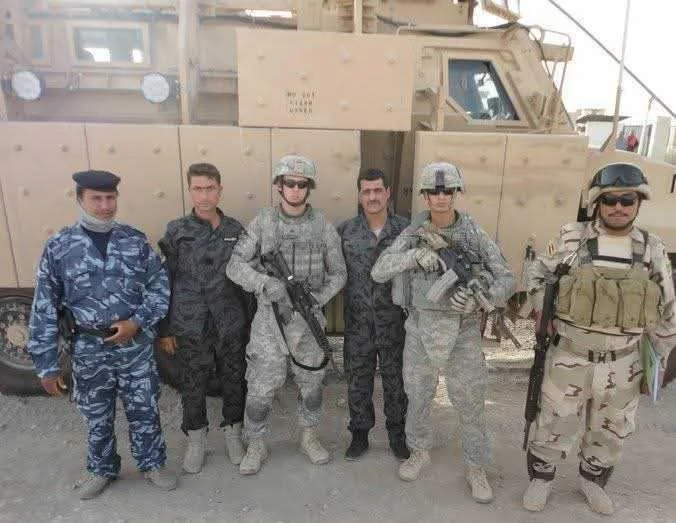
NCC colleagues and U.S. Army veterans Angel Dellatorre and Jake Angevine pictured alongside fellow service members during their deployment in Iraq.
Something Bigger Than Ourselves.
We’ve always believed our work should stand for something bigger than ourselves. The company was founded with a mission to simplify the transition to electric transportation, reduce emissions, improve air quality and help build a better future for generations to come. And that same sense of purpose matters here.
This is about recognizing sacrifice, honoring commitments and making sure combat-injured veterans are not penalized because their service ended sooner than they ever intended.
Jake brings the same persistence, accountability and sense of mission to NCC that defined his military service. He leads from the front, takes ownership and keeps pushing until the job is done.
“Jake represents the very best of service—both in uniform and here at NCC,” said Jim Burness, Founder and CEO of National Car Charging. “We’re proud to have him on our team and even prouder to stand behind him as he advocates for fellow combat-injured veterans whose sacrifices deserve to be fully recognized.”
For NCC, supporting Jake is part of that larger purpose. It means standing with one of our own, but also with the thousands of combat-injured veterans whose careers were cut short through no choice of their own and whose service should never be valued any less because of it.
Still Waiting on Washington.
As the year draws to a close, the fight is far from over. The Major Richard Star Act has not become law, despite overwhelming bipartisan support. The challenge is no longer support—it is passage. Efforts to move the bill forward have stalled as Congress debates how to fund it without reducing benefits for other veterans.
This is an issue that should rise above politics, party lines and special interests. Combat-injured veterans should not be forced to fight a second battle at home for benefits they earned in service to this country.
The Major Richard Star Act already has broad bipartisan support. What it needs now is action.
For the men and women whose military careers were cut short by combat injuries, this should not be complicated: honor the service, keep the promise, and get it done.
Learn More & Stay Up to Date
Want to learn more, follow the latest developments, or add your voice? Check out these excellent resources:
For the latest advocacy updates, background and ways to get involved, visit the Star Act Alliance, which is focused specifically on passage of the legislation.
For those who want to take action, Wounded Warrior Project also offers resources to help supporters contact Congress and advocate for an end to the so-called “wounded veteran tax.”
And for the most official status, bill text and congressional activity, follow H.R. 2102 and S. 1032 on Congress.gov.
Finally, read KXXV’s full story to hear more about Jake’s experience and why the Major Richard Star Act matters so deeply to him and thousands of other combat-injured veterans.
_______________________

About Jake Angevine
Jake Angevine is part of the National Car Charging team in Austin, where he helps keep complex EV charging operations moving every day. Outside of work, he is a husband, dad and veteran who cares deeply about family, service and giving back. Since joining NCC, Jake has also become an enthusiastic convert to electric driving—proof that sometimes the best way to understand the EV world is simply to live in it. Whether he is solving problems at work, advocating for fellow veterans or supporting the larger community, Jake brings the same grounded, mission-driven approach to everything he does.
About NCC
Headquartered in Denver, Colorado, National Car Charging was founded in 2011 around a simple idea: make the transition to electric transportation easier and help build something better in the process. Since then, NCC has grown alongside the EV industry, working with communities, public agencies, businesses and organizations across the country as they navigate what can often be a complicated transition. At its core, NCC is a team of people who believe cleaner transportation can improve air quality, reduce emissions and create a better future for the next generation. The company’s work has expanded over the years, but that original sense of purpose has stayed the same.