Snow or Shine: Why EVs Are the Ultimate Ride When Winter Gets Real.
6 Ways EVs Outperform Gas Cars When Winter Gets Brutal.
If you watched the Broncos game yesterday, you saw it: sideways snow, brutal wind, too many missed kicks, and a stadium that looked more like a snow globe than an NFL field. And that was just Denver. From blizzards in the Midwest to ice storms back East, winter is reminding the entire country this week —loudly—that it’s still in charge.
Every time the weather turns ugly, I get the same question: “Don’t you wish you still had a gas car?”
Short answer? Nope!
Long answer? Let me explain—because in 2026, the data, the tech, and real-world experience all point to the same conclusion: Winter is actually where EVs shine.
Yes, snow, ice, and subzero temps are tough. But if you’re driving an electric vehicle, you’re often better equipped to handle them. Here’s why.
First, Let’s Clear the Air on Range.
Cold weather affects every vehicle. Period. Gas cars burn more fuel in winter just to warm engines and keep cabins livable—same as they burn more fuel blasting AC in summer. EVs aren’t unique here; they’re just honest about it.
So let’s put the tired range panic to bed and talk about what actually matters: how the car behaves when conditions are bad.
1. Instant Torque = Control When You Need It Most.
Gas engines stumble in the cold. EVs don’t. Tap the accelerator and the power is immediate. No lag. No gear hunting. No drama. That instant torque is a huge advantage when you’re navigating slick intersections, snow-packed lanes, or drivers who clearly forgot how winter works.
And one-pedal driving? Chef’s kiss. Smooth, predictable deceleration that helps you stay composed instead of white-knuckled.
2. Regenerative Braking = Winter Confidence.
On icy roads, jerky braking is your enemy. Regenerative braking slows the car gradually and smoothly, giving you better control and traction when things get sketchy. Whether I’m creeping through a snow-covered neighborhood or adding space between me and an overconfident tailgater, regen braking feels like a built-in safety buffer.
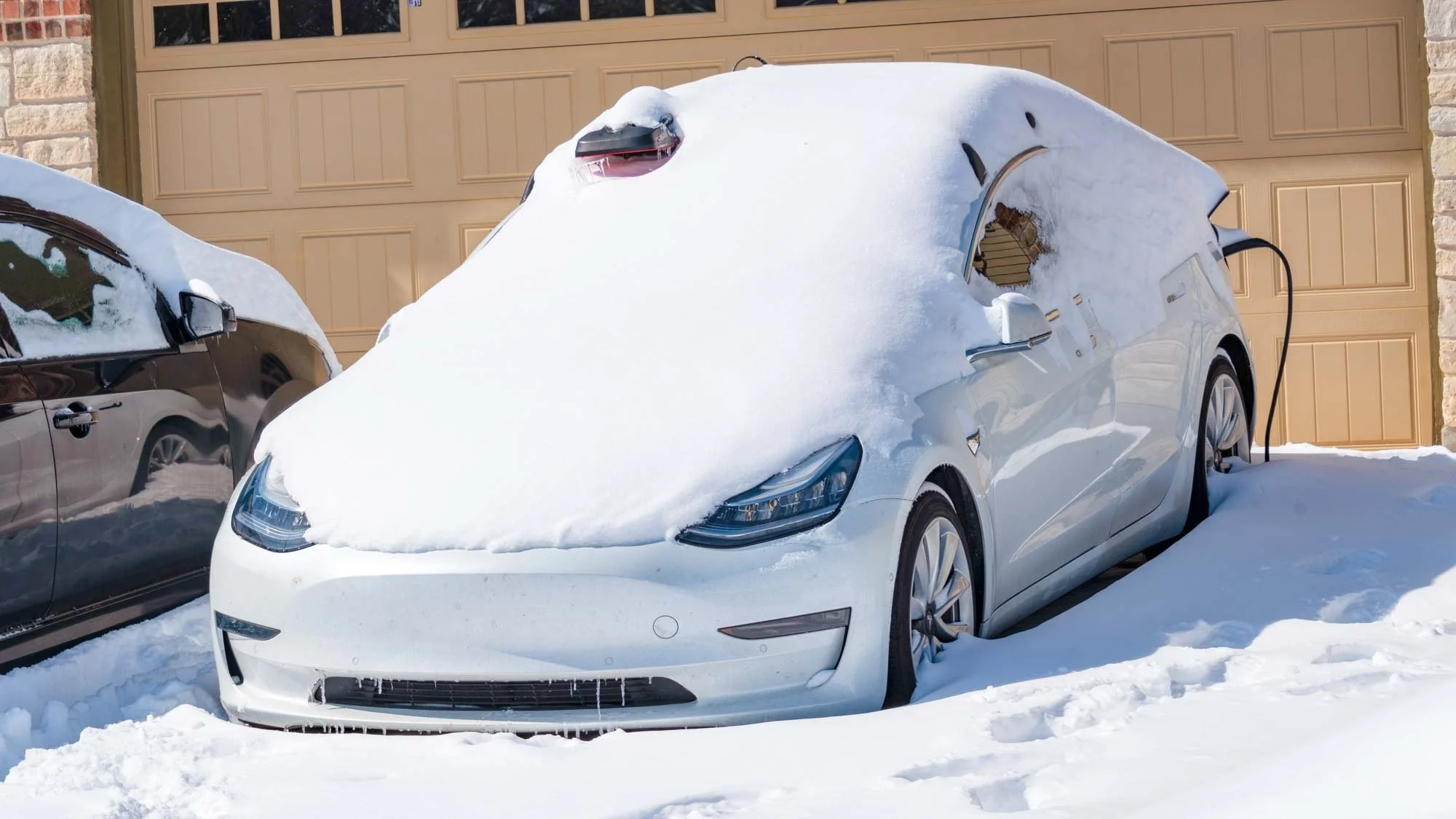
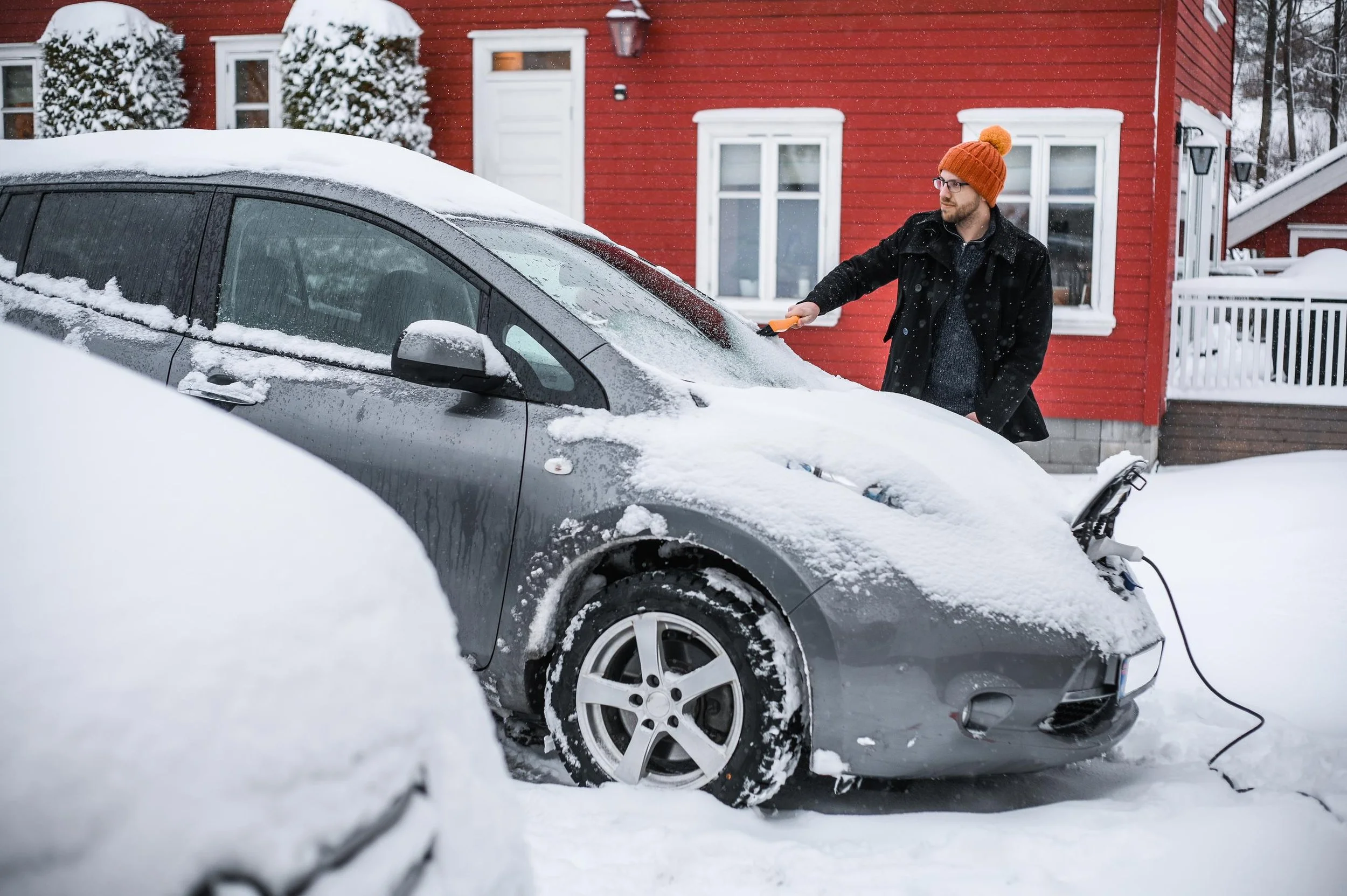
Preconditioning outside means no scraping—snow and ice melt away before you even step outside.
It’s calmer. Smarter. And in winter, that matters.
3. No Cold Starts. Ever. Pre-Conditioning Is a Game-Changer.
Remember sitting in a gas car, freezing, while the engine angrily protested the cold? EVs don’t do that. In 2026, pre-conditioning is table stakes—and it’s magic. Your car warms up before you get in, using grid power while it’s plugged in. Cabin? Toasty. Windows? Clear. Battery? Ready to go.
No idling. No wasted fuel. No illegal “just five more minutes” warm-ups. And yes— charging at home still means no winter gas station stops, which alone feels like winning.
4. Weight + Winter Tires = Serious Stability.
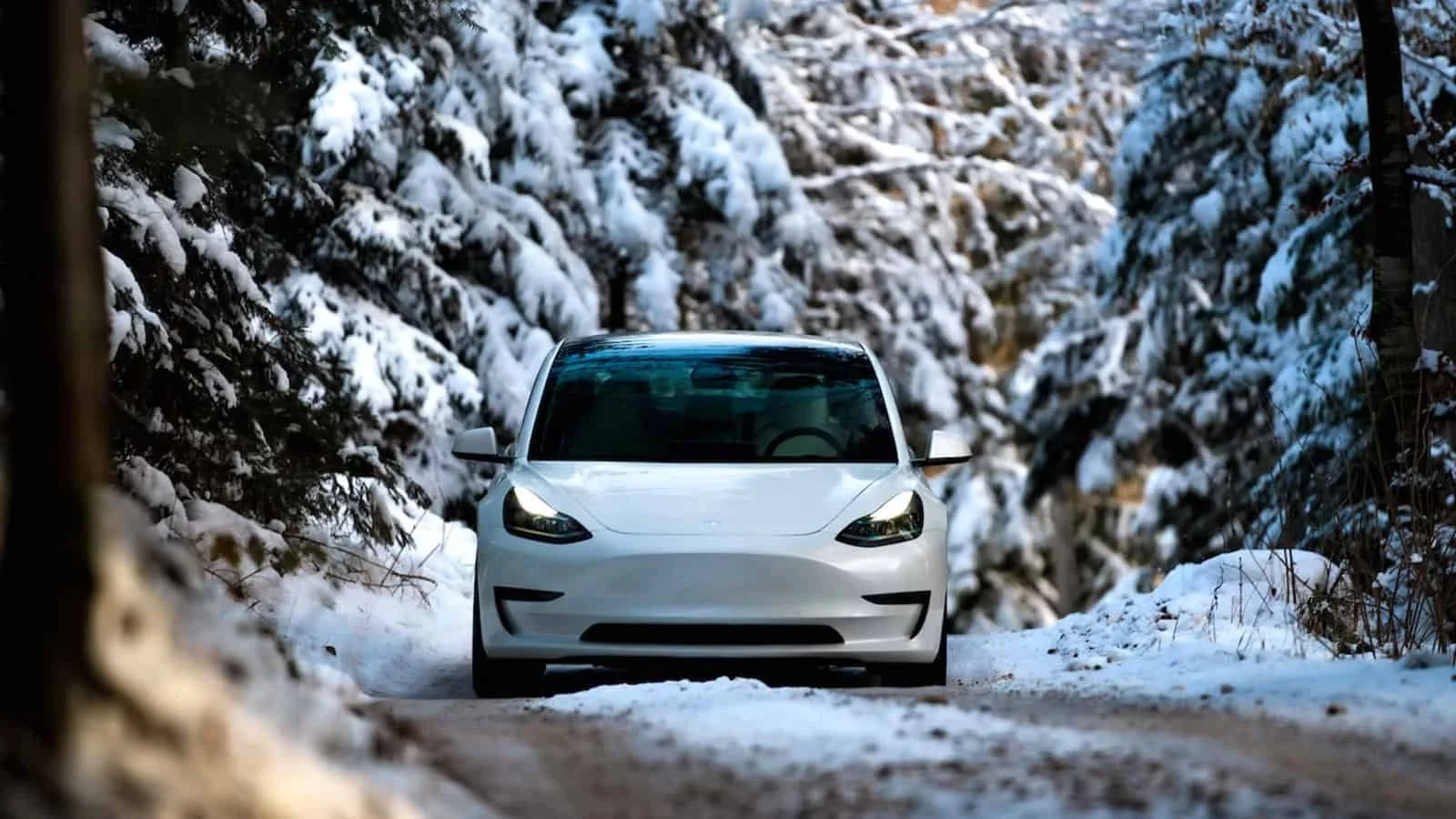
EV batteries add weight—and in winter, that’s a feature, not a bug. A lower center of gravity + advanced traction control + real winter tires = a vehicle that feels planted when roads turn ugly. Snowstorms, slush, ice—it all feels more manageable when the car is working with you, not against you.
5. Less Maintenance, Fewer Winter Headaches.
Winter is brutal on gas cars: oil thickening, belts stressing, engines working overtime.
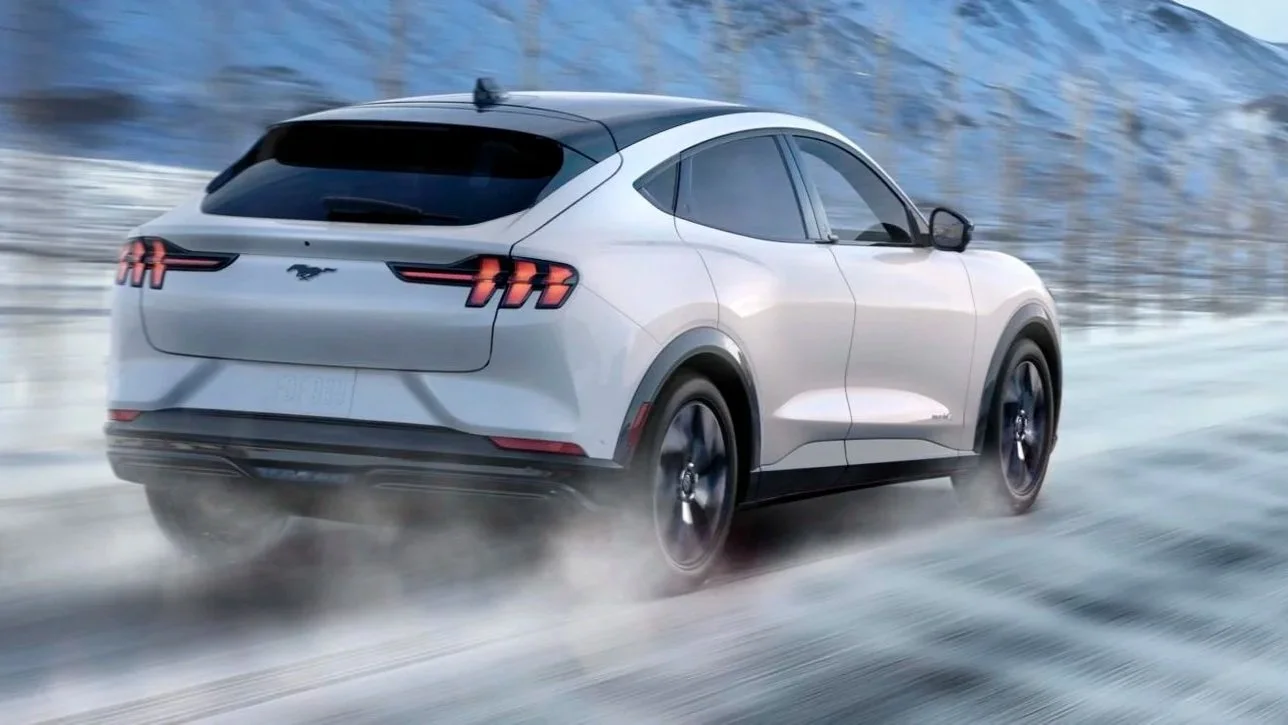
EVs? Far fewer moving parts. No oil changes. No exhaust systems. Less stuff to break when it’s 10 degrees and snowing sideways.
And when traffic grinds to a crawl during a storm, you’re not burning $4-a-gallon fuel—you’re quietly regenerating energy. Winter driving, but make it cheaper.
Bonus: Cleaner Driving When It Matters Most.
Winter storms already strain infrastructure and air quality. Gas cars idling in traffic only make it worse. EVs cut tailpipe emissions entirely. And as the grid gets cleaner, every cold-weather mile matters more—not less. Driving electric in winter isn’t just practical; it’s responsible.
Winter Driving Doesn’t Have to Be Miserable.
Over the last 12 years, my husband and I have owned or leased nine different EVs across five models—from an early Leaf to the newest Rivian (yes, my husband is proudly a car geek). And every winter, the verdict is the same: EVs feel calmer, smoother, and more in control.
Before joining NCC, I spent 12 years commuting 60 miles round-trip between Denver and Boulder. In a gas car? That drive was loud, stressful, and draining before the workday even began. In an EV? Totally different vibe—steady, predictable, and honestly… kind of pleasant. The drive was still long, and winter still does its thing, but how you experience it makes all the difference.
Look, if conditions are truly awful, stay home. No vehicle beats common sense. But if you have to be on the road—during snowstorms, wind events, or the kind of weather that made today’s Broncos game look like survival training—an EV is the winter wingman you want.
More control.
More confidence.
Less stress.
Winter may be raging across this week around the country, but behind the wheel of an EV? You’re ready for it.

About the Author: Margaret-Ann Leavitt
Margaret-Ann leads marketing and communications at National Car Charging and Aloha Charge, where she blends strategy, storytelling, and a deep commitment to sustainability to drive EV infrastructure growth nationwide. Based in Denver and having gone to college in upstate NY, she’s no stranger to snow, cold starts, and real-world winter driving—and has been fossil fuel–free for nearly a decade. A former leader at Mattel, FCB Global, Home Instead, and multiple high-growth startups, she brings a rare mix of data-driven rigor and creative vision to demystifying why EVs often outperform expectations when winter gets real. She’s also a longtime advocate for youth empowerment, including serving as Board Chair of Girls Athletic Leadership School (GALS Denver).